
Social Media Management in 2026: A Practical Operating Guide
Define the Audience and Purpose
Social media management includes planning content, publishing, responding and reviewing results. Start by deciding who the account serves and what useful role it plays for that audience. A business may use it to explain services, show real work or answer recurring questions. Do not assume that posting more often or using a popular format will automatically create qualified enquiries.
Build a Content Plan From Real Material
Collect approved project photographs, product information, team knowledge and customer questions. Decide which material is suitable for each channel. A short video can demonstrate a process; a carousel can explain a sequence; a text post can clarify a decision. Use captions and readable design. Obtain permission before sharing customer images or identifying details.
Assign Review and Response Responsibilities
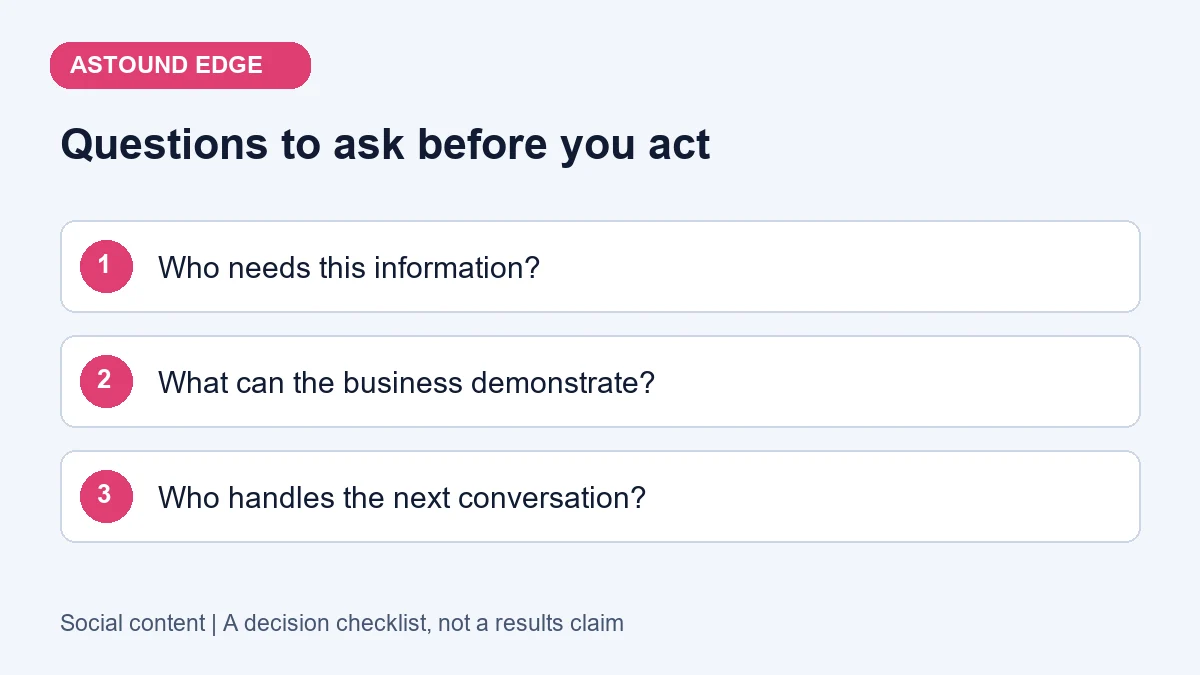
Agree who supplies facts, who approves posts and who handles replies. Set a realistic response process and an escalation route for complaints or sensitive questions. Keep private customer matters out of public comment threads. An automated response should not promise availability, pricing or outcomes the business cannot deliver.
Use Tools Without Losing Oversight
Scheduling and drafting tools can help organize work, but staff should verify the final message, destination link and publication settings. Check current platform requirements when preparing assets because formats and features change. AI-assisted copy needs factual review and a voice that fits the business. Never fabricate testimonials or present generated scenes as photographs of completed client work.
Connect Posts With the Right Page
Send a reader to the service, product or explanation the post describes. Use consistent campaign tags where appropriate and test the link on a phone. Keep the landing-page message aligned with the post. A clear next step is more useful than a generic instruction to visit a website that makes the reader search again.
Report Attention and Outcomes Separately
Reach, impressions and interactions describe different kinds of attention. Website visits, received enquiries and sales describe later stages. Report them separately and acknowledge the limits of attribution. Review which topics produce useful conversations, not only which posts receive the most reactions. Keep a record of what changed so the next content cycle builds on evidence.
Create a Sustainable Workflow
Choose a manageable set of channels and a publishing rhythm the team can support with real material. Our social media marketing, graphic design and motion graphics services can support different parts of that workflow. Astound Edge Creative can help connect content production with a clear review and enquiry process.