
5 Reasons Your Startup Should Plan for SEO
Fit SEO to the Stage of the Business
A startup should consider SEO as part of how customers discover and evaluate its offer, not as a guaranteed source of immediate revenue. The right amount of work depends on whether the product is validated, the audience is understood and the website can convert interest into a useful next step. A small, focused plan can be more valuable than a large publishing commitment before those foundations exist.
1. Customer Questions Improve the Offer
Researching the language people use can reveal gaps in how the business explains its product. Use sales conversations and support questions alongside search data. Distinguish a person learning about a problem from someone comparing providers. This helps shape pages around genuine decisions rather than around a list of high-volume terms that may have little connection to what you sell.
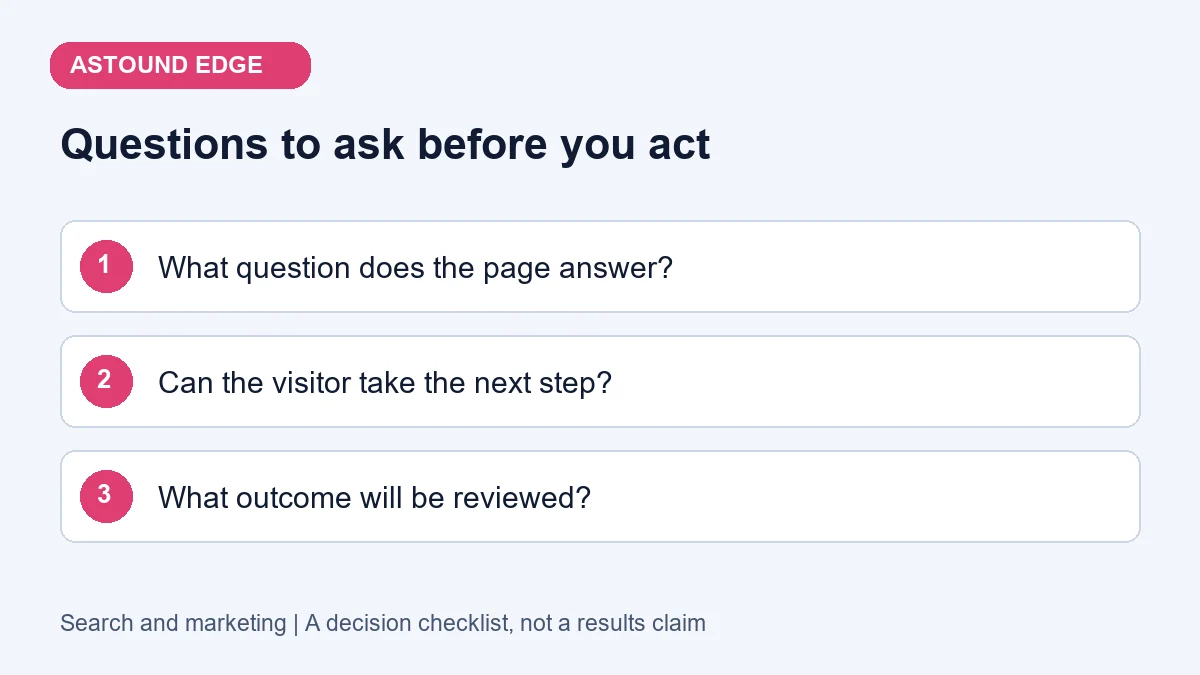
2. Clear Pages Support More Than Search
A useful service or product page also helps people arriving from referrals, email or advertising. Explain the audience, scope and next step in plain language. Add evidence you can verify and be honest about limitations. The resulting page gives the team a consistent resource to share during customer conversations, even before it attracts substantial organic traffic.
3. Early Technical Decisions Can Prevent Rework
Agree on readable URLs, sensible navigation and a manageable publishing process while the site is small. Check that important pages are accessible and avoid accidentally exposing unfinished material. Plan how redirects, image sizes and metadata will be maintained. These decisions do not guarantee rankings, but they can reduce the cost of correcting a confusing structure after the website grows.
4. Measurement Makes Assumptions Visible
Set up reporting around meaningful actions and verify that those actions are recorded correctly. Keep a form submission, a qualified opportunity and a completed sale as separate stages. Compare traffic sources and landing pages without assuming every visitor is a prospective customer. A startup can use this evidence to refine the offer and decide which activities deserve more time.
5. Useful Content Can Build Over Time
Create resources that answer recurring questions and maintain them as the product changes. A carefully written explanation or comparison can continue helping readers beyond a short campaign. That value depends on accuracy and relevance, not simply on publishing frequency. Avoid generic articles that repeat what is already on the site without adding a clearer answer or practical decision aid.
When Another Priority Comes First
If the offer is still changing every week or the enquiry process is broken, address those issues before commissioning a large SEO programme. A time-sensitive promotion may need a different acquisition approach. Choose a realistic review period and budget, then document what you expect to learn. Treat search visibility as one part of the business’s customer acquisition plan.
Define a Small Initial Scope
Further reading: Google SEO Starter Guide.
A practical starting scope can include a few core pages, a technical review and enquiry measurement. Our SEO services, web design and growth reporting support those foundations. Astound Edge Creative can help decide which work is justified now and which should wait until the startup has stronger evidence about its customers.