
Choosing an Ecommerce Platform in 2026: A Requirements Checklist
Start With Operations, Not a Forecast
Platform selection should be based on the store’s actual requirements rather than a broad forecast about ecommerce growth. Write down the catalogue, customer types, order volumes you need to support and the people responsible for daily operations. A feature that looks impressive in a demo may add little value if it does not solve one of those requirements.
Test a Representative Product
Use a real example with the variants, images, stock rules and delivery information your store needs. Ask how the platform handles an unavailable option, a changed price and a returned item. Check whether staff can make routine updates safely. This exercise often reveals practical limitations that are hidden by a simple demonstration product.
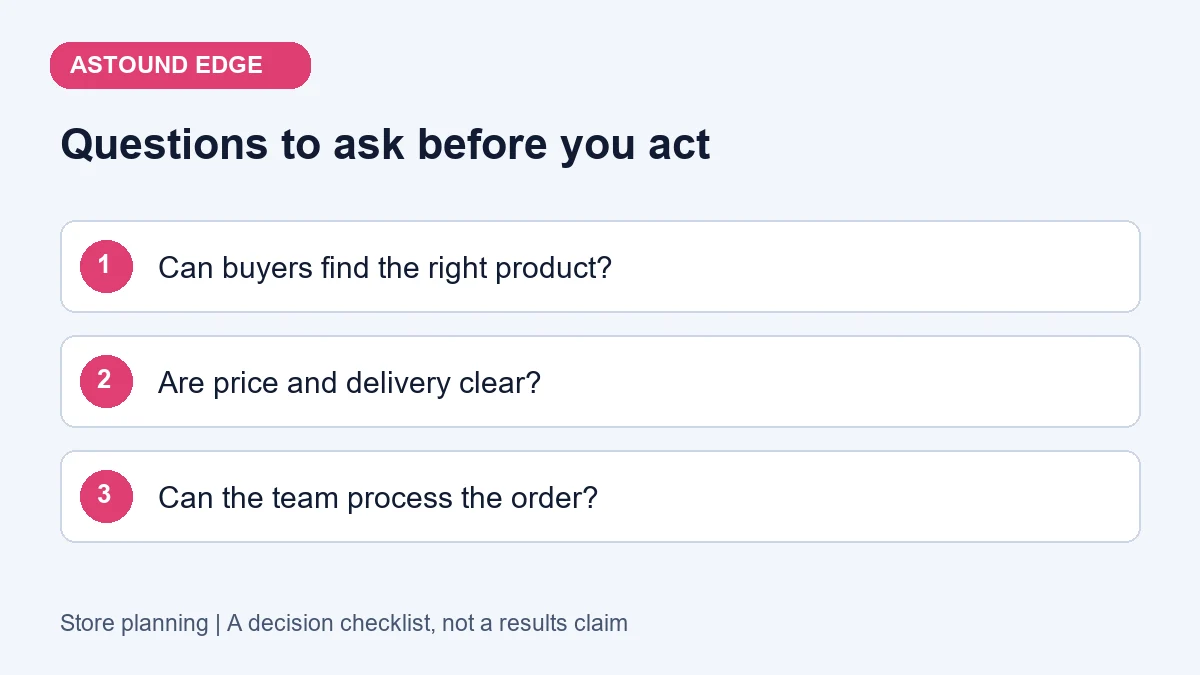
Map Integrations Before Committing
List payment, fulfilment, inventory, accounting and marketing connections. Identify which are essential at launch and which can wait. Check current compatibility directly with the platform and integration providers. Include responsibility for troubleshooting and future changes in the project scope rather than assuming that every connection will continue working without maintenance.
Compare Total Responsibility and Cost
Consider platform fees, hosting where relevant, apps, payment arrangements, development and ongoing support. Confirm account ownership and access arrangements. A managed platform and a self-managed store distribute responsibilities differently. Neither removes the need for accurate product information, staff training and a tested customer journey.
Protect the Existing Customer Journey
For a migration, inventory important URLs and plan redirects before launch. Preserve the records the business needs and agree how customer data will be handled. Test product discovery, checkout, notifications and fulfilment using the platform’s supported methods. Keep a recovery plan and define who monitors the store immediately after release.
Make the Decision Reviewable
Use a comparison sheet with mandatory requirements, evidence from demonstrations and unresolved questions. Our ecommerce development, Shopify development and WordPress development services support different routes. Astound Edge Creative can help assess the fit and implementation work without claiming that one platform is best for every business.