
How to Increase Relevant Organic Traffic in 2026
Define the Traffic You Want
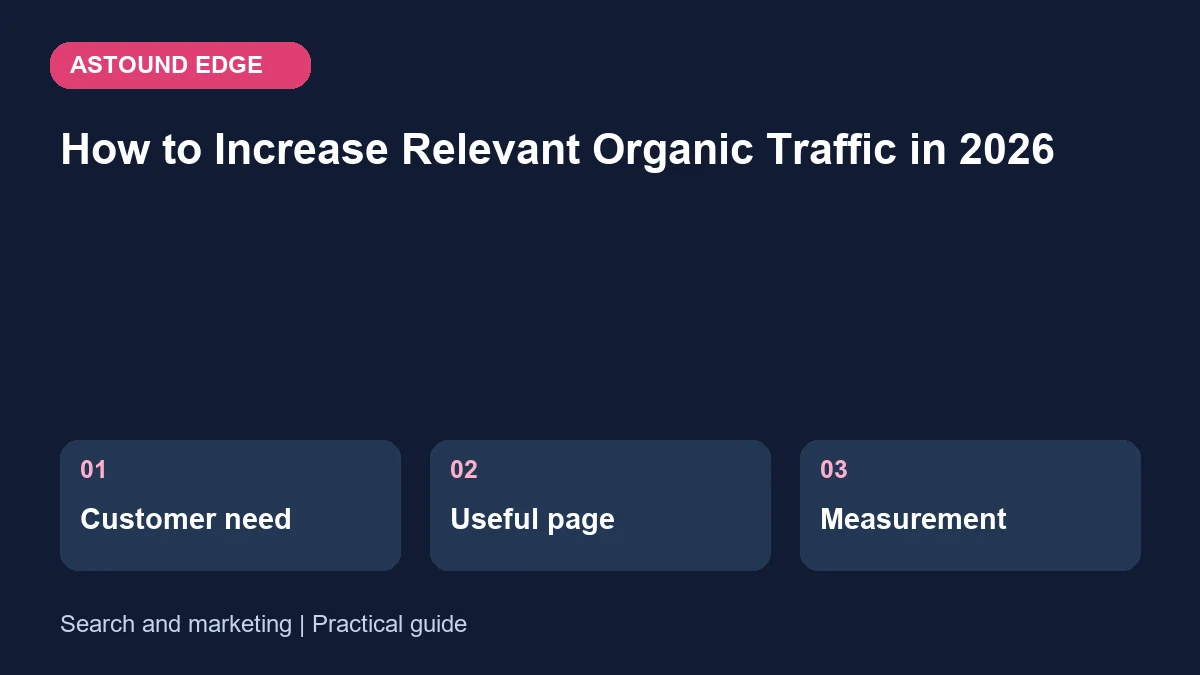
Organic traffic is useful when the visitors have a reason to care about the business. Start with the services or products you can deliver and the questions people ask before buying. A large volume of unrelated visits may create little commercial value. Set a baseline for relevant landing pages, search queries and confirmed enquiries before making changes so that later comparisons have a clear purpose.
Fix Barriers Before Adding More Pages
Check whether important pages are accessible, internally linked and eligible for indexing. Review accidental noindex directives, broken links and conflicting canonical signals. A successful HTTP response alone does not mean a page contains useful content. Open the page and confirm that the main information actually renders. Preserve working URLs where possible and plan redirects carefully when a genuine structural change is needed.
Improve Pages That Already Match Demand
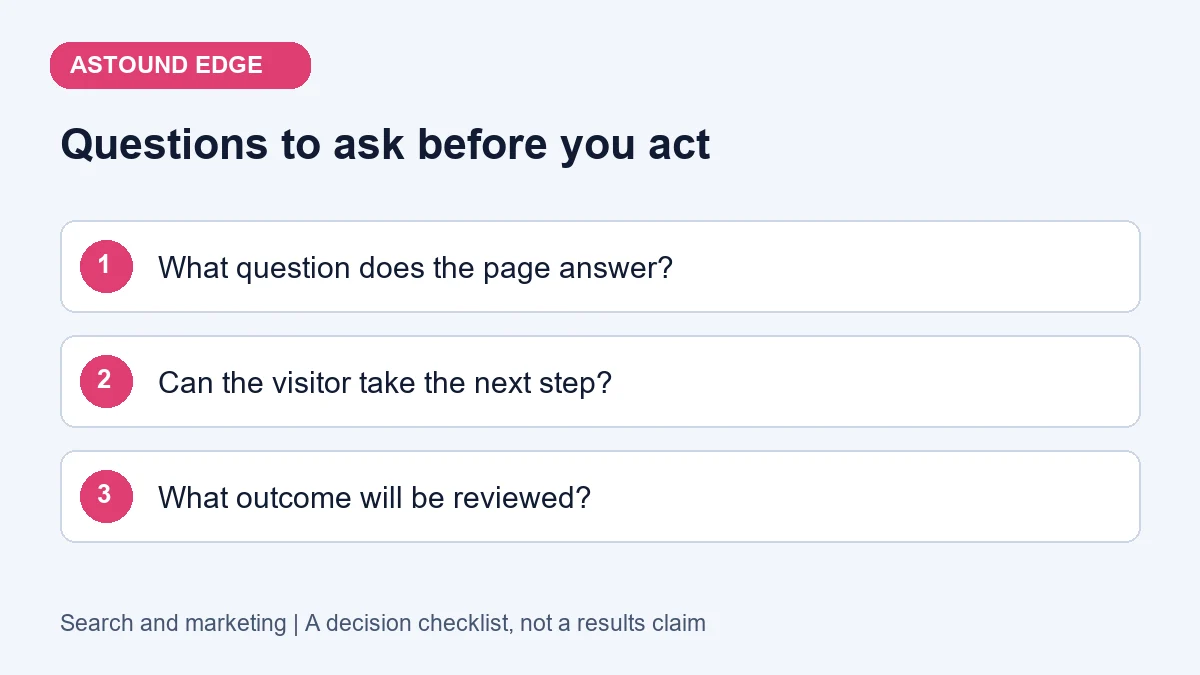
Look for pages that address a useful topic but leave obvious customer questions unanswered. Explain the process, scope, limitations and next step. Replace vague claims with details the business can substantiate. Use headings to help readers navigate the answer. Do not lengthen a page simply to reach a word count; a concise explanation can be better than several paragraphs repeating the same service terms.
Publish New Content Only When It Adds Value
A new article should answer a distinct question or provide a different decision aid. A new location page needs truthful, useful information about serving that area. Changing a city name in otherwise identical copy does not create a meaningful resource. Before publishing, compare the proposed page with existing content and decide whether an update or a consolidated page would serve the reader better.
Make Related Information Easy to Find
Add contextual links where they help a reader move from a question to a relevant service or supporting explanation. Use descriptive anchor text. Check that important pages are not isolated from the site’s normal navigation. Relevant images, clear labels and usable mobile layouts help people understand the content once they arrive; decorative clutter should not obscure the information or the enquiry path.
Review Search and Business Outcomes Separately
Compare complete periods in search reporting and inspect page-level changes. Branded growth and nonbranded growth answer different questions. Keep local organic results separate from Maps observations. Website analytics can help explain measured behaviour, but a key event should be checked against the actual enquiry process. Annotate content releases, migrations and tracking changes before attributing an increase or decline to SEO.
Keep a Repeatable Improvement Queue
Further reading: Google SEO Starter Guide.
Record the page, the customer problem, the proposed edit and the evidence needed to verify it. Our technical SEO, local SEO and growth reporting services can support different parts of this process. Astound Edge Creative can help prioritize work around useful search visibility and relevant enquiries without promising a fixed ranking or traffic increase.