
How to Start an Online Business With an Ecommerce Website
Validate the Offer Before Building the Store
Start by defining the product, the intended customer and the problem the purchase solves. Talk to prospective buyers and review how similar needs are currently met. A website cannot compensate for an unclear offer or an unreliable supply process. Document what you can sell, what it costs to fulfil and what questions customers need answered before buying. Use those findings to shape the first version of the store.
Prepare the Product Information
Collect accurate names, descriptions, prices, options, photographs and stock rules. Explain important differences between variants. Avoid copying a supplier’s generic description when customers need more specific information. Make sure any claims about performance, materials or suitability are supportable. Decide who owns the product data and how changes will be checked before they appear on the public site.
Define the Operating Process
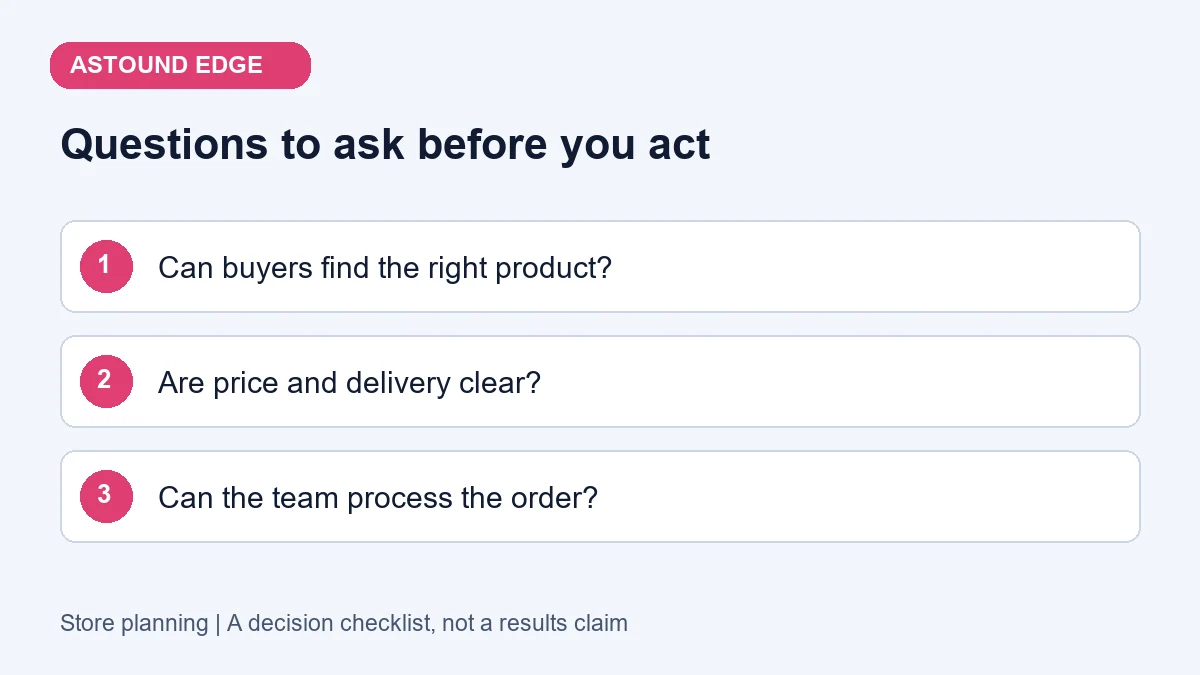
Map what happens after an order arrives: payment confirmation, stock allocation, packing, dispatch, customer updates and support. Agree how cancellations and returns will be handled and obtain appropriate advice for policies that affect your business. These decisions should inform the store setup. Do not launch with placeholder policy text that does not match the way orders will actually be processed.
Select a Platform Against Requirements
Compare solutions using the same checklist of products, integrations and customer tasks. Include maintenance, transaction arrangements and third-party tools in the review. If you choose a hosted platform, understand its rules and account ownership. If you choose a self-managed setup, assign responsibility for hosting, updates and recovery. Keep the initial scope focused enough that the team can operate it confidently.
Design a Clear Purchase Journey
Organize the catalogue in terms customers understand. Show useful images and explain price, options and delivery information before asking for payment. Make buttons and form errors understandable. Check navigation and checkout on a phone. A visitor should not have to contact support to learn basic information that could have been presented clearly on the product page.
Test Before Promotion
Use the platform’s supported testing process to check orders, notifications and fulfilment handoffs. Verify analytics separately from operational order records. Test failed payments and unavailable products as well as the happy path. Keep a launch checklist and a way to restore the previous state if an important integration fails. Only begin wider promotion when someone is responsible for monitoring and responding to real orders.
Build Traffic Around the Product
Prepare helpful product and category content before spreading effort across many channels. Our ecommerce development can help build the store, Shopify development supports that platform, and SEO services can address search discovery. Astound Edge Creative can help plan the website and marketing work around a defined launch scope and the capacity of your business.