
Choosing an Ecommerce Platform: Benefits and Tradeoffs
Choose Around the Store You Need to Run
The right ecommerce platform depends on your products, operating processes and the people maintaining the store. Start with the catalogue, payment requirements, fulfilment rules and integrations. A platform that suits a small catalogue may require a different approach for complex variants, subscriptions or wholesale accounts. Compare the whole operating cost and maintenance responsibility rather than choosing from a theme preview alone.
Hosted Stores Reduce Some Technical Responsibilities
A hosted platform can provide a managed environment for running a store, with design and app choices within that platform’s rules. Shopify is one example to evaluate. Review the specific plan, payment arrangements, required apps and any restrictions affecting your products before making a commitment. A hosted service still requires content maintenance, access controls and careful testing of the customer’s purchase journey.
WordPress and WooCommerce Offer a Different Model
A WordPress-based store can suit a business that wants commerce connected with a substantial publishing or service website. It also introduces responsibility for hosting, updates, backups and compatibility between extensions. Ask who will maintain those parts after launch. A flexible setup is only helpful if the team can operate it reliably and the required integrations are supported.
Custom Development Needs a Specific Reason
A custom store or integration can be appropriate when a documented business requirement cannot be met sensibly with established tools. Write that requirement down before choosing the approach. Include ongoing support, testing and future changes in the estimate. Custom development should solve a clear operational problem rather than add complexity simply because it is possible.
Compare the Customer Journey
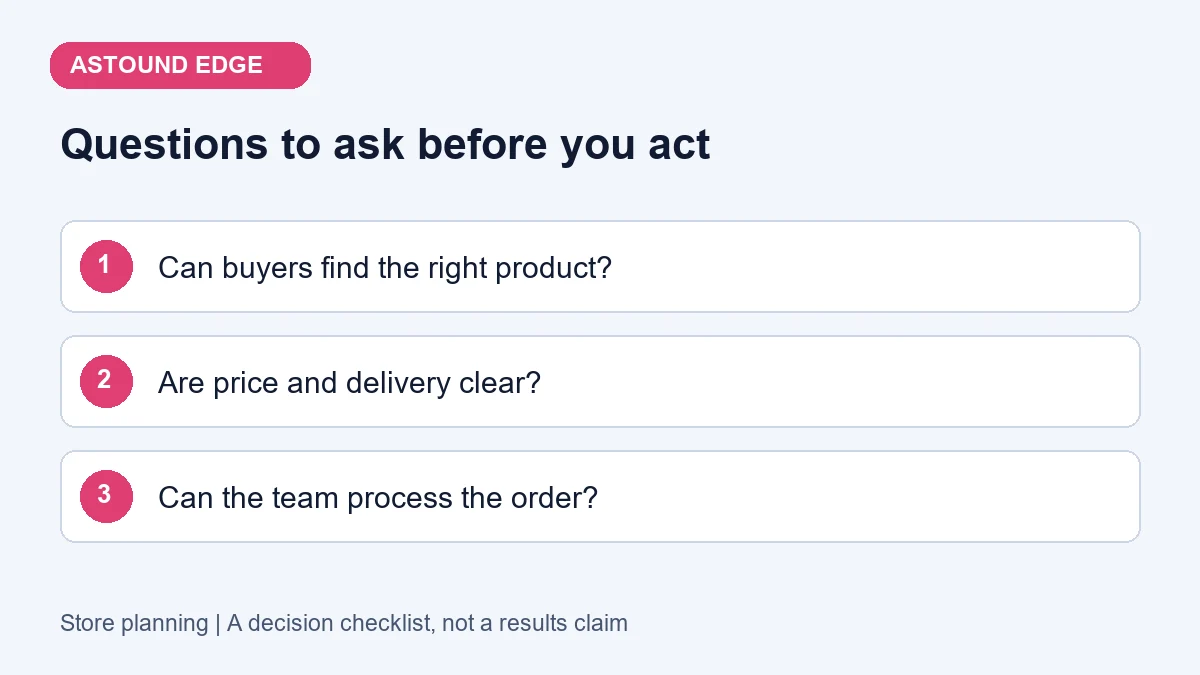
Test how shoppers find a product, select an option, understand delivery and complete a purchase. Check search, filters, product descriptions and error messages on a phone. Consider accessibility and the clarity of checkout instructions. Product photography and accurate descriptions matter whichever platform you choose. A technically elaborate store can still lose customers if it makes basic purchase information difficult to find.
Plan Migration and Ownership
If you already have a store, inventory products, customers, content, important URLs and integrations before moving. Decide which records must be preserved and how permissions will be handled. Map redirects for changed public URLs and verify them after launch. Keep a recovery plan and agree who owns the platform account, domain, design assets and third-party subscriptions.
Create a Decision Sheet
List mandatory requirements separately from preferences. Ask each proposed solution to show how it handles the same sample product, order and reporting task. Our ecommerce development, Shopify development and WordPress development services support different implementation routes. Astound Edge Creative can help compare those routes against the work your store needs to perform, rather than declaring one platform universally best.