
What Is SEO? A Practical Guide to Search Engine Optimization
Start With the Purpose of the Page
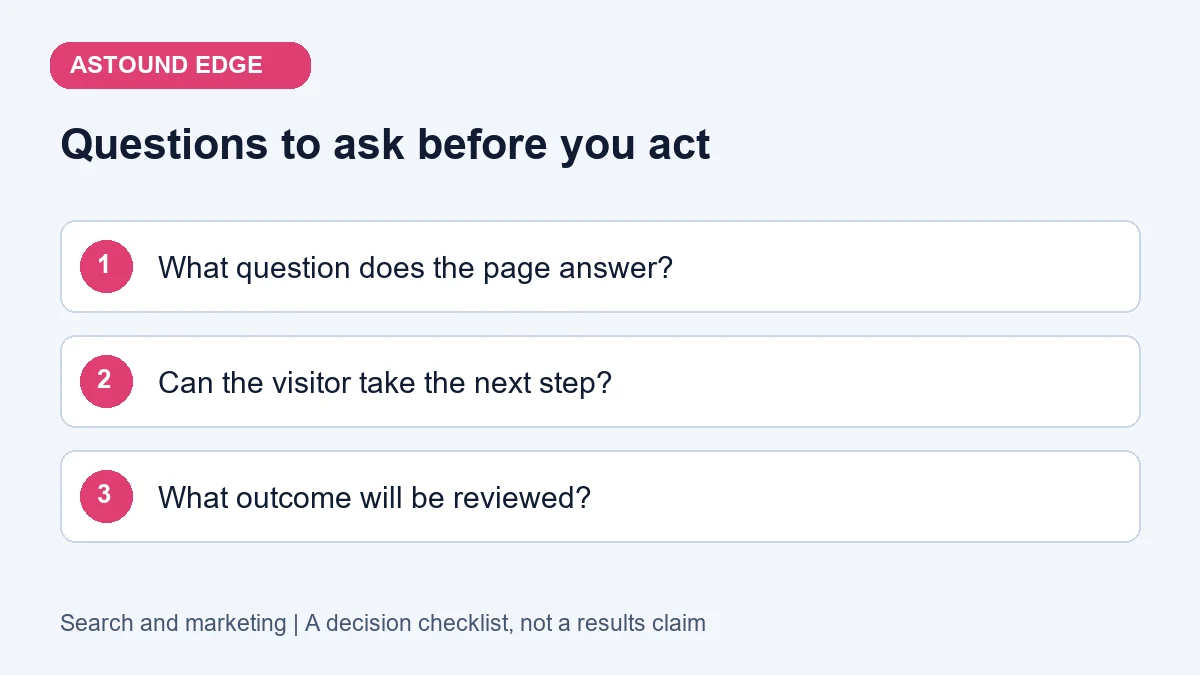
Search engine optimization, or SEO, is the work of making a website easier for search engines to discover and understand while making its information more useful to people. It includes technical access, content, navigation and the evidence that helps a reader evaluate a business. SEO cannot guarantee indexing, rankings or sales. Begin by asking which customer question each page should answer and what a satisfied reader should be able to do next.
Discovery and Indexing Come First
A search engine must be able to find and access a page before it can consider showing it. Check that important URLs return a successful response, have normal crawlable links pointing to them and are not unintentionally marked noindex. A sitemap helps communicate preferred URLs, but it does not force indexing. Canonical tags identify a preferred version when similar URLs exist; they should agree with the site’s links and redirects. Investigate these basics before rewriting content that search engines cannot access.
Write Around a Real Search Intent
A person comparing providers needs different information from a person learning a definition. A service page should describe the work, the audience, the process and the next step. An educational article should explain its subject clearly and give a reader a way to apply the information. Use a descriptive title and headings that reflect the actual content. Repeating a keyword in every paragraph does not substitute for a useful answer.
Make the Website Easy to Navigate
Connect related pages with links that explain their destinations. For example, an article about improving a contact form can point to a relevant website design service. Avoid linking every phrase or repeatedly sending visitors back to the same page. Images should support the explanation and have appropriate alternative text. A mobile reader should be able to read the page, operate the navigation and complete the intended task without struggling with the layout.
Show Who Is Responsible for the Content
Give readers accurate information about the business and the people behind the advice. Support important claims with evidence and identify the limits of any case-study results. Cite original sources where they help a reader check technical statements. A named author does not create expertise by itself: the content still needs to be accurate, specific and helpful. Avoid invented credentials, copied testimonials and unsupported promises.
Review Outcomes With the Right Reports
Search Console can help you examine search queries, pages and visibility in Google Search. Website analytics can show what measured visitors do after arrival. These systems use different definitions and will not always reconcile exactly. Separate branded searches from searches by people who do not yet know the company. Measure confirmed enquiry success independently from email and phone clicks, and assess whether those enquiries are relevant to the business.
Choose a Manageable First Project
Further reading: Google SEO Starter Guide.
Start with a small set of important pages, document the current problems and save a baseline before editing. Technical SEO, local SEO and website development address different parts of that work. Astound Edge Creative can help turn the findings into a practical sequence of changes rather than a list of disconnected ranking promises.